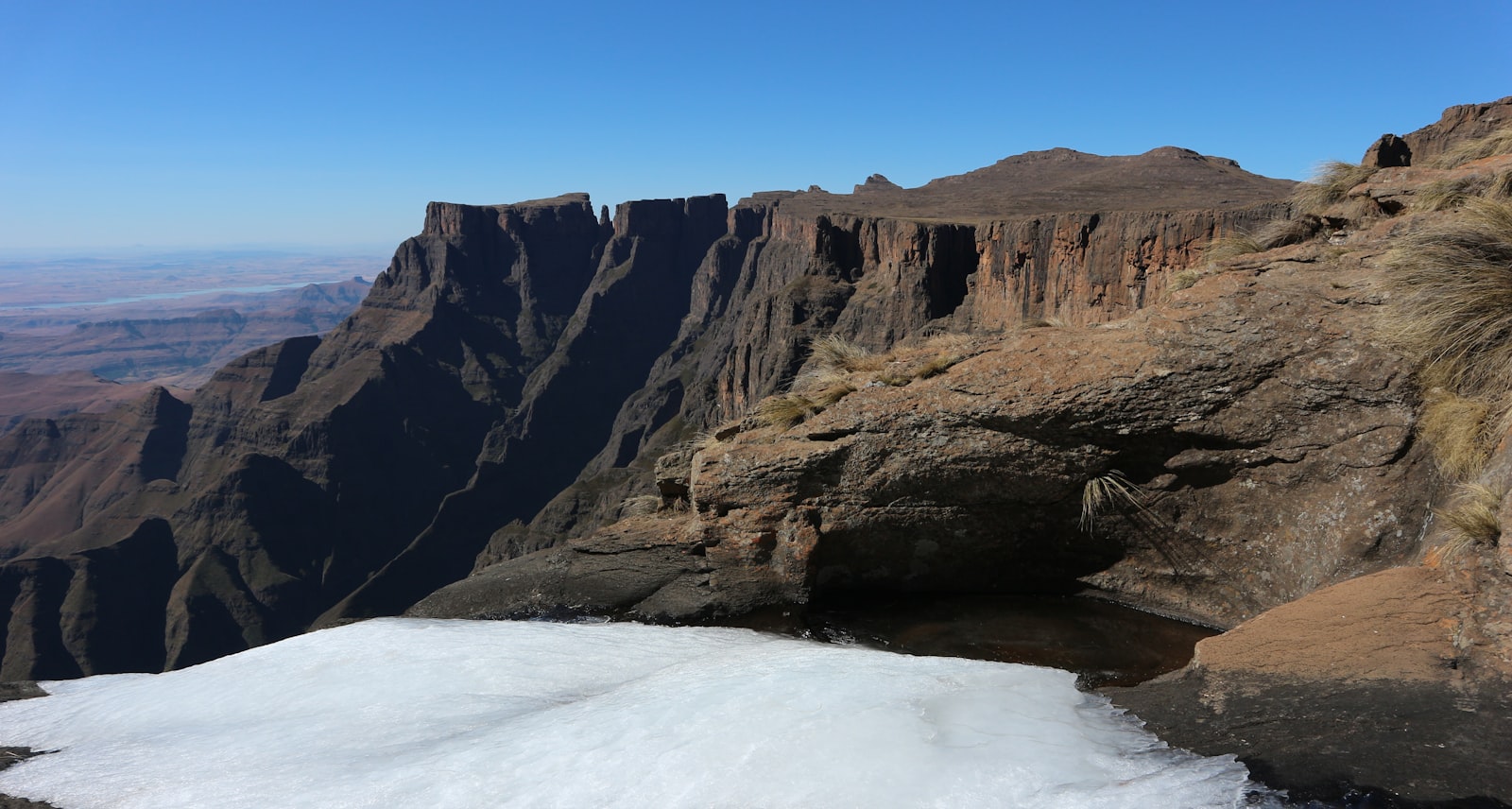
The Drakensberg Amphitheatre is a fourteen-kilometre basalt wall that drops a thousand metres from the escarpment to the valley floor in a single unbroken cliff, the longest and highest in the southern hemisphere. I approached it from the north, camping two nights at the base and reaching the Chain Ladder at dawn on the third morning. The chains are fixed into the rock at the two crux points and most hikers treat them as a route-finding aid rather than a safety device, but in wet conditions they are essential: the basalt becomes slick within minutes of rainfall and the drop on the exposed sections is absolute. The summit plateau is a different biome: rolling moorland, scattered sinkholes, and the source of the Tugela River, the second-highest waterfall in the world when it is in flow. The panoramic view from Sentinel Peak across the Royal Natal National Park is the reason most people make the effort. At seven in the morning, with the mist still breaking below us and the first sunlight catching the tops of the cliffs, it justifies the early start.

Africa
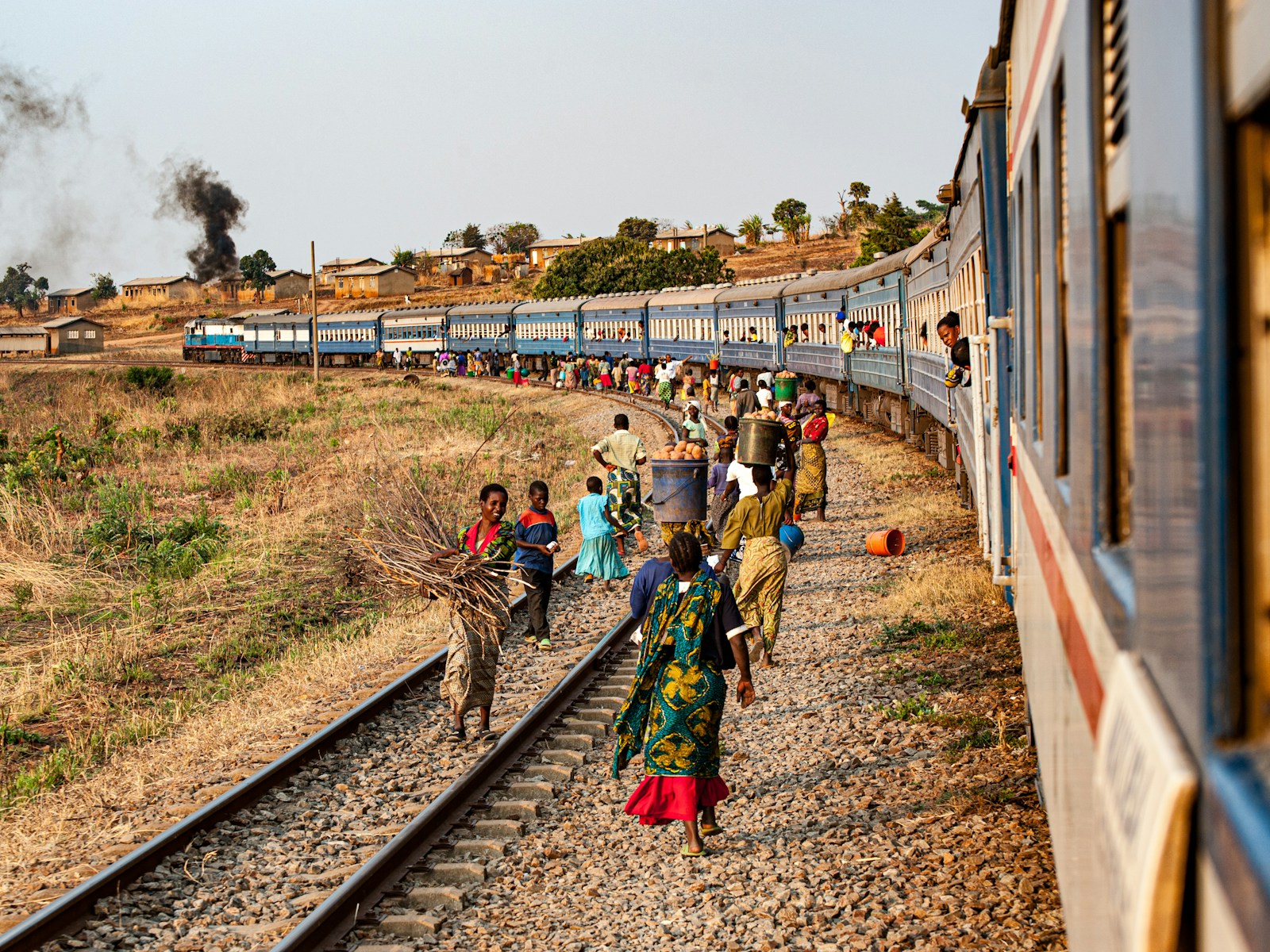
The Tazara Railway: Dar es Salaam to the Zambian border
Few journeys cut across Africa like the Tazara, a Cold War-era line that rattles from the Indian Ocean coast through the Selous ga