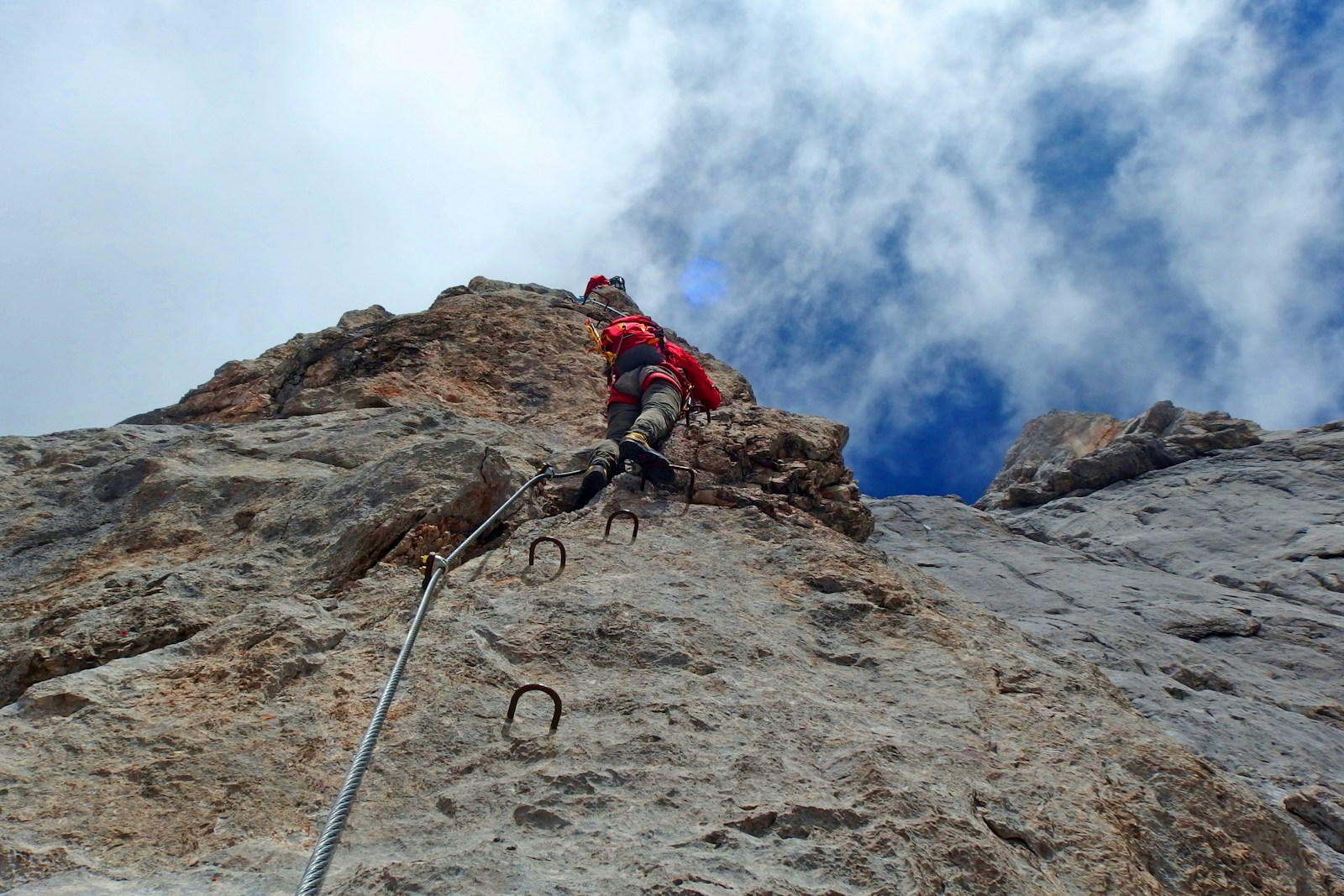
Cables, ladders and rungs bolted into WWI battlefields let hikers climb Dolomite rock faces that would otherwise need ropes and a rack.
The via ferrata network across the Dolomites was largely built during the First World War to move troops through the mountains, and today those same iron cables, ladders and rungs let hikers with a harness and two lanyards climb terrain — the Tofana di Rozes, the Lagazuoi — that would otherwise require full rock-climbing kit.
Clipping and unclipping past each anchor point becomes second nature within an hour, but the exposure never quite does, especially on routes like the Ferrata Ivano Dibona where a ledge narrows to a boot's width above several hundred metres of air.
Start on a grade-1 route like the Ferrata delle Trincee before attempting anything harder, rent a proper via ferrata kit with a shock-absorbing lanyard rather than improvising, and check the weather obsessively — an afternoon thunderstorm on an exposed cable is the single biggest danger in these mountains.