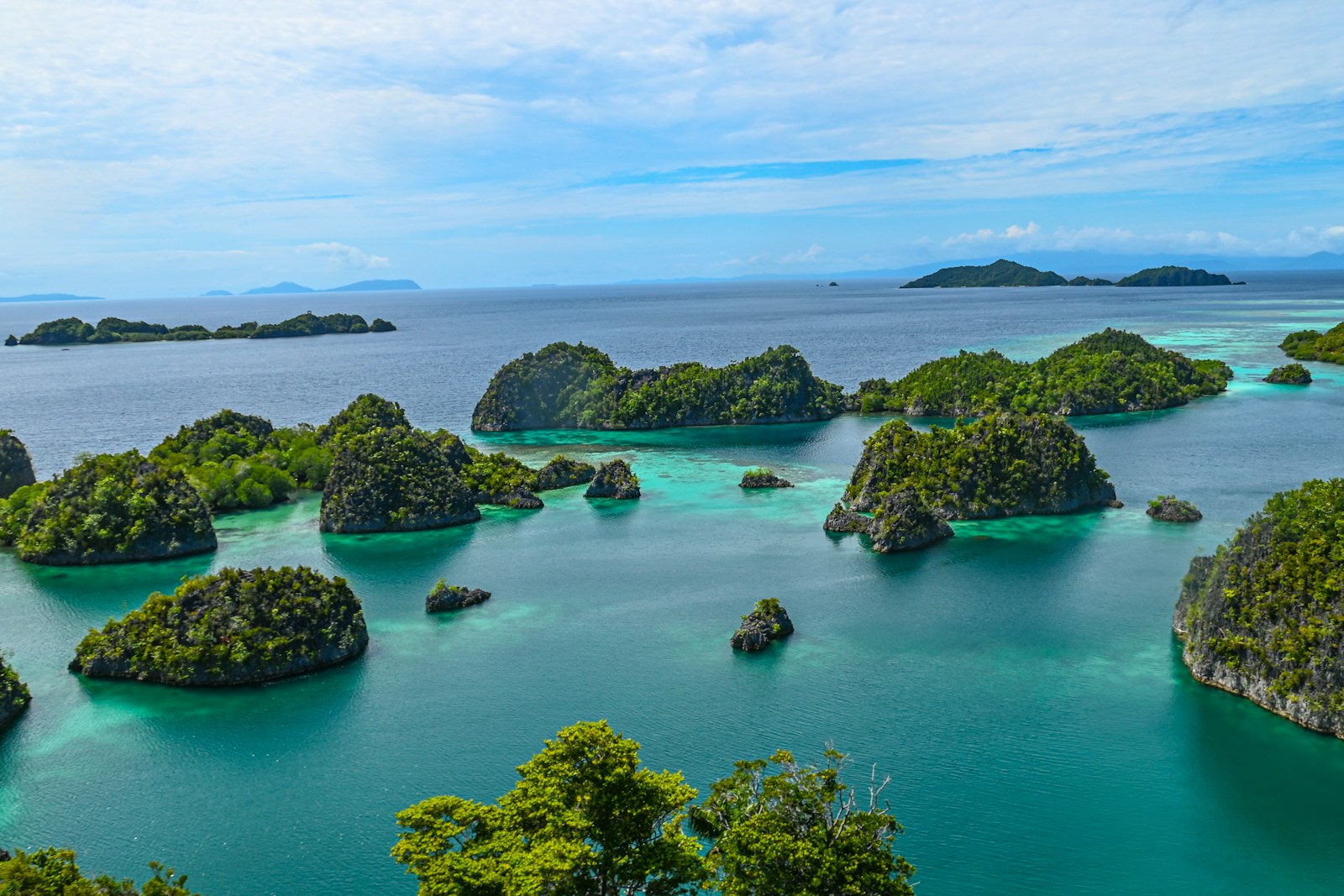
Off the western tip of New Guinea, Raja Ampat's scattered limestone islands sit above the richest marine biodiversity on Earth.
The classic view — jungled karst islands poking out of turquoise water, best seen from the viewpoint above Piaynemo — barely hints at what's underwater; the archipelago's reefs hold more coral and fish species than anywhere else surveyed, and even a short snorkel off a homestay jetty turns up reef sharks and turtles.
Homestays, simple wooden bungalows built and run by local families on islands like Kri and Arborek, are how most travelers experience Raja Ampat, and staying in one channels tourism money directly to the communities managing the marine protected areas that keep the reefs healthy.
Getting here takes effort — a flight to Sorong followed by a public or chartered boat to the islands — and that friction is part of what has kept Raja Ampat wild; budget several days beyond the travel itself, since bad weather can delay boat transfers without warning.