In Italy's food capital, the best meals start with flour on the counter and a nonna correcting your technique.
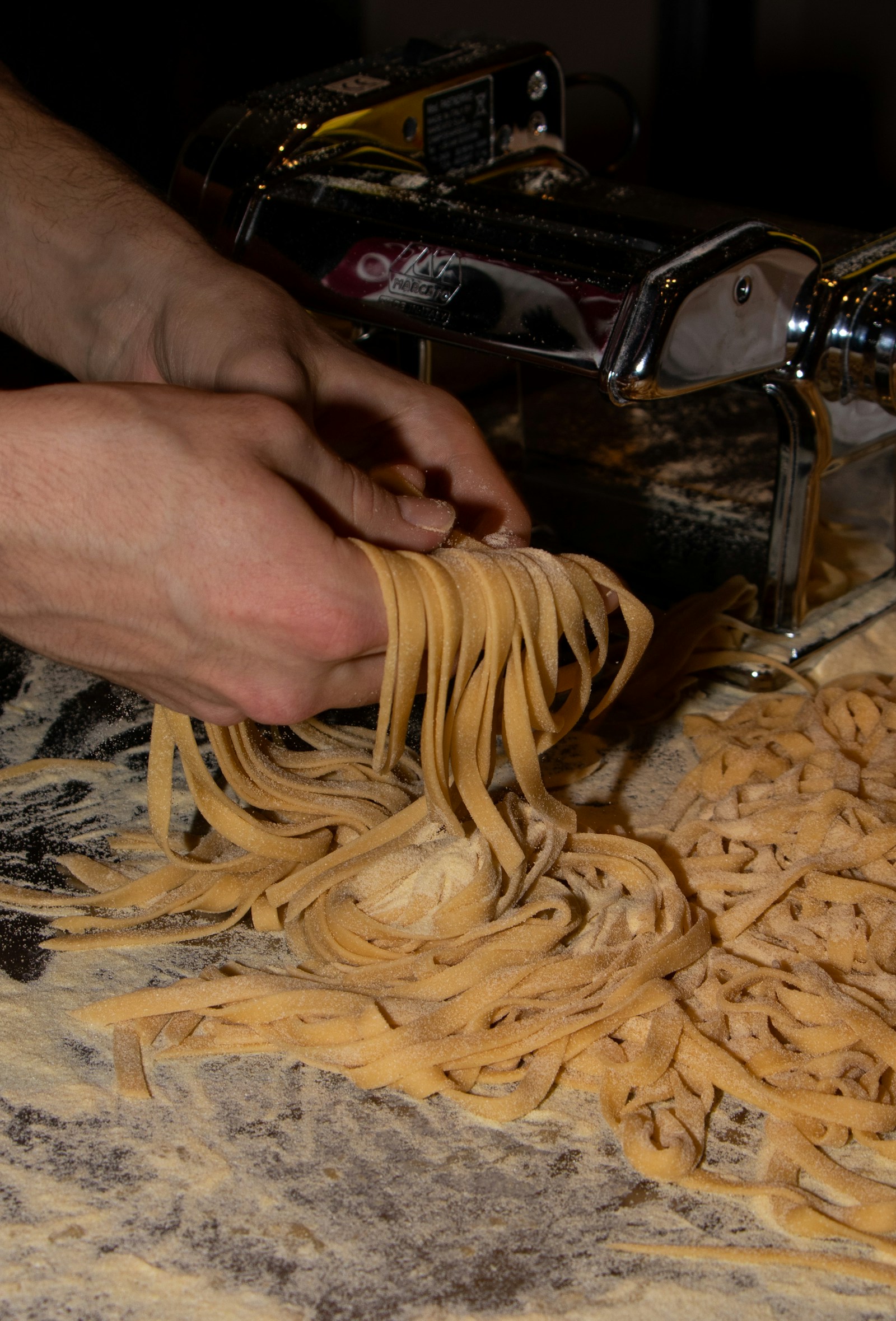
Bologna doesn't do tourist pasta. Book a morning with a sfoglina — a pasta maker, almost always a woman, almost always self-taught from watching her own mother — in a kitchen behind an unmarked door near Via Pescherie Vecchie. You'll crack eggs into a flour well, work the dough until your forearms ache, and roll it thinner than you thought possible before it goes under the knife for tagliatelle.
What you make in the morning you eat in the afternoon, usually with a ragù that has been reducing since before you arrived — real Bolognese is a slow, meat-heavy sauce, barely tomato at all, nothing like the red sludge sold under its name elsewhere. Order it at a trattoria on a side street rather than the piazza-facing places, and expect a short menu that hasn't changed in decades.
Save room for tortellini in brodo, the dish locals actually crave on a cold night: tiny meat-filled pasta swimming in clear capon broth. A market stall in Quadrilatero, the medieval food quarter, will sell you a kilo of fresh tortellini to take home — vacuum it before your flight and it survives the trip better than any souvenir.