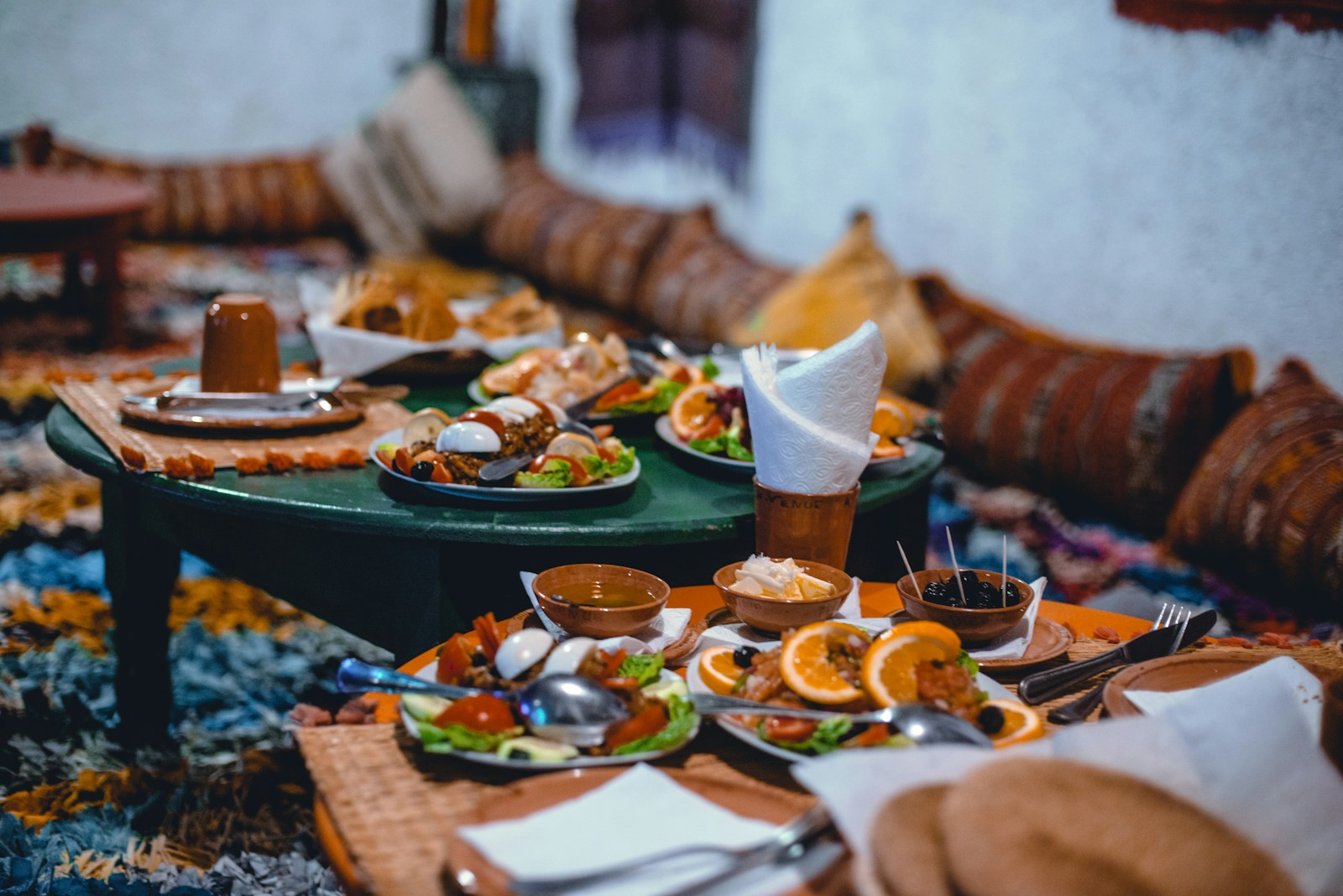
Beyond the smoke and noise of the food stalls, the real lesson in Marrakech's cooking happens over a low table piled with small plates.
Jemaa el-Fnaa transforms after sunset into a food hall with no walls: dozens of numbered stalls, each shouting for your attention, serving grilled kefta skewers, snail soup ladled from a battered pot, and bowls of harira, the tomato-lentil soup that breaks the fast during Ramadan. Pick a stall that's busy with locals, not the one with the most aggressive tout.
For the fuller picture, book a meal in a riad courtyard or a family home, where dinner arrives as a spread rather than a sequence — a plate of Moroccan salads (cooked, not raw: roasted peppers, spiced carrots, aubergine zaalouk), olives, warm khobz bread, and orange slices dusted with cinnamon, all before the tagine even reaches the table.
A practical note on the tagine itself: the best ones are cooked for hours over charcoal, not gas, so don't expect fast service — a proper lamb-and-prune tagine takes as long as a slow-braised stew anywhere else, and rushing the kitchen only gets you a worse one.