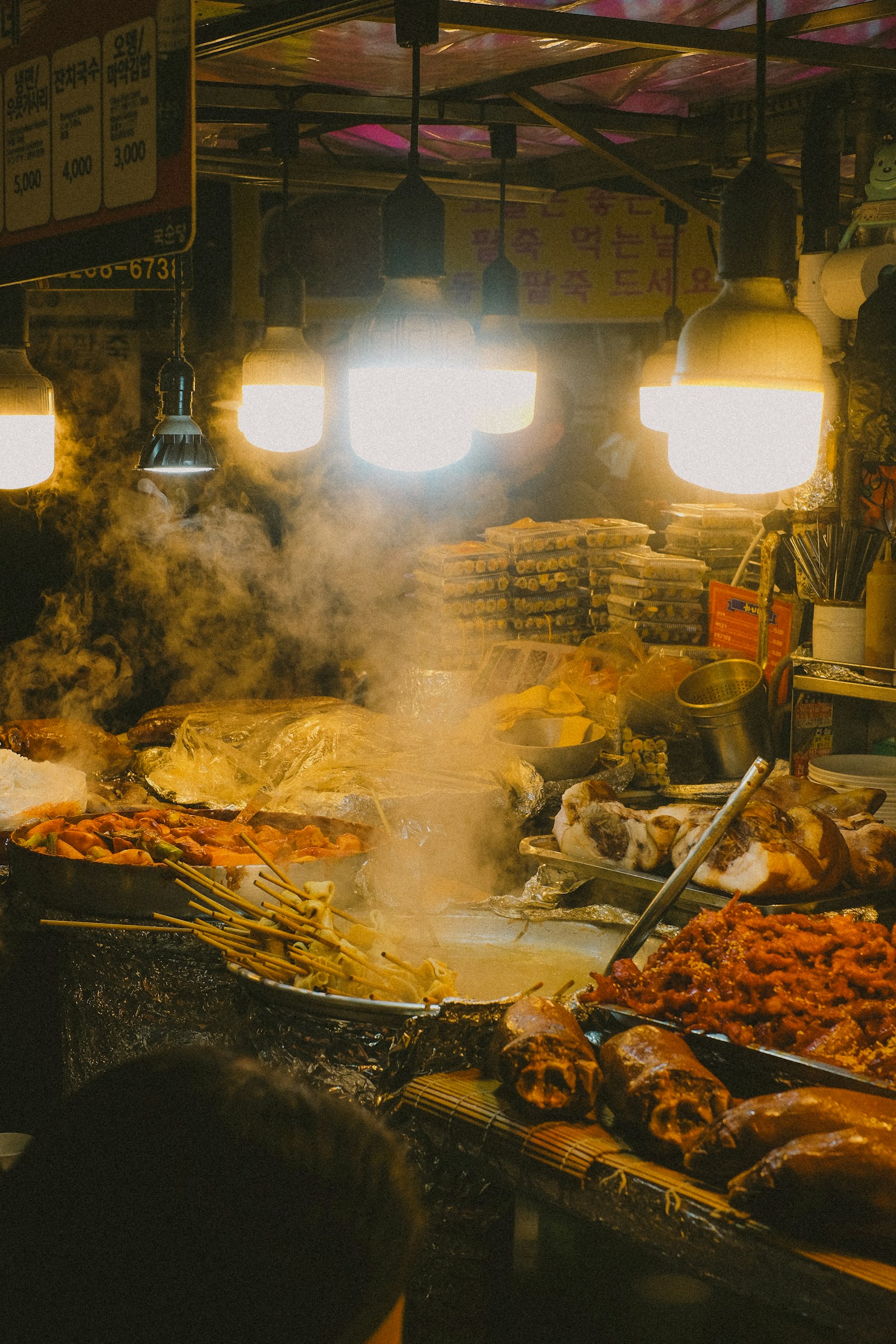
Seoul's oldest covered market is where grandmothers who've run the same stall for forty years still out-cook every trendy restaurant in the city.
Gwangjang has been open since 1905, and its food alley runs on a system that hasn't changed much since: pick a stall, sit on the plastic stool, and order by pointing, because the ajummas running the pans are too busy to explain the menu twice. Bindaetteok — thick mung bean pancakes fried on flat griddles until the edges crisp — is the market's signature dish, and the smoke and sizzle of a dozen pans going at once is half the reason people come.
Work through the alley methodically: mayak gimbap (tiny 'addictive' seaweed rice rolls, dipped in mustard sauce), knife-cut noodles in a spicy broth, and yukhoe, Korean beef tartare mixed with pear and egg yolk at a stall that's sold nothing else for generations. Everything is cheap by design — this is a market for eating a lot of small things, not one large meal.
Go at night when the stalls are lit with bare bulbs and the steam off the pans catches the light — it's louder, more crowded, and considerably more fun than a daytime visit, though if raw beef isn't your thing, an afternoon trip still delivers on the pancakes and noodles alone.