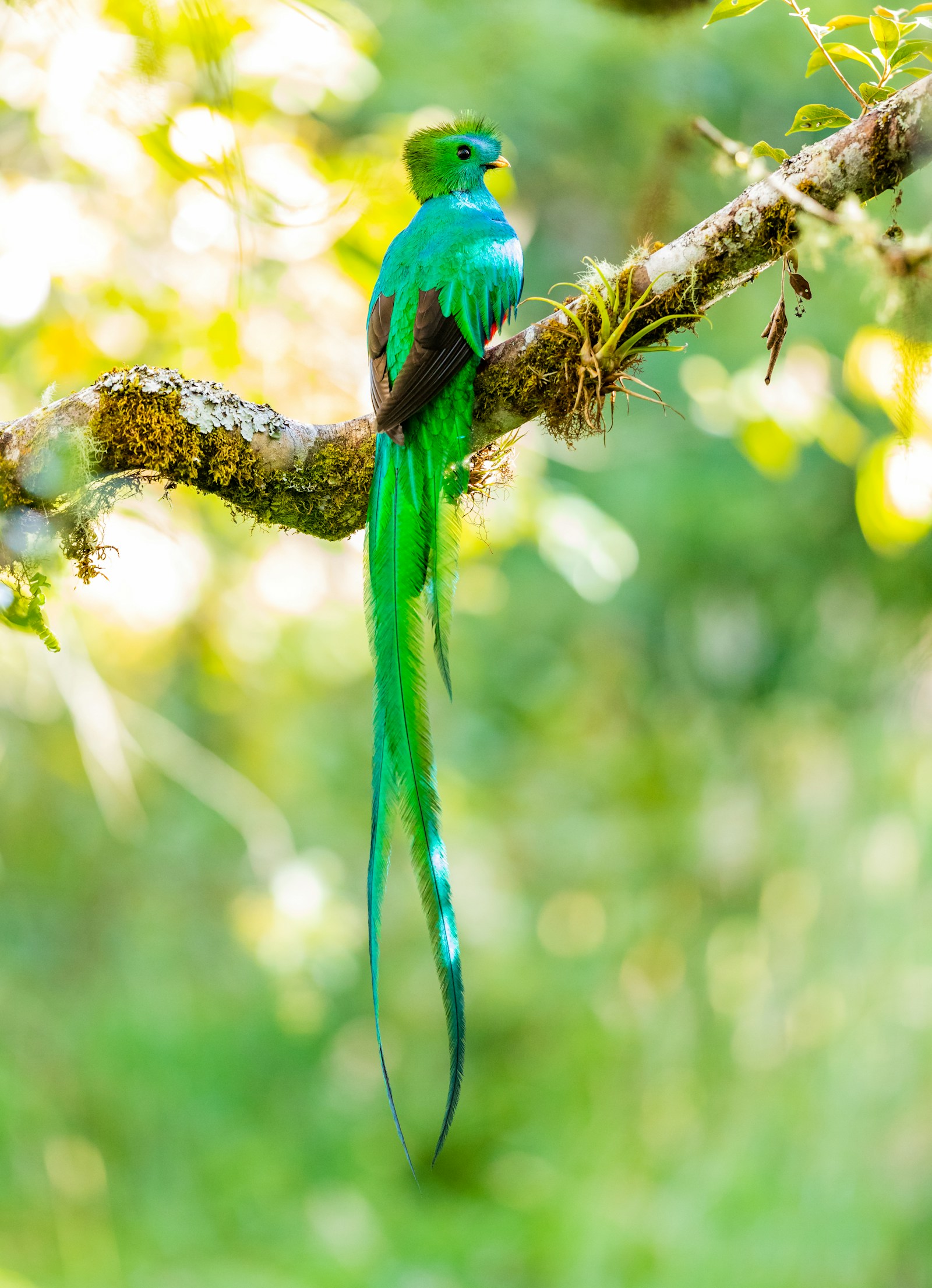
The resplendent quetzal's iridescent tail and improbable colouring have drawn birders to Costa Rica's high cloud forest for decades, and the valley of San Gerardo de Dota remains the surest place to find one.
At nearly 2,300 metres in the Talamanca mountains, the air turns cool and the forest closes into a dripping tangle of oaks draped in moss and bromeliads. Quetzals nest in these hollow oak trunks and feed on wild avocado, so local guides know the fruiting trees by heart and can often position a group beneath one before the bird even shows.
The reveal, when it comes, still stops conversation: a flash of iridescent green and crimson, then that absurdly long tail streaming behind as the bird settles on a branch to swallow a fruit whole. Mixed flocks of tanagers and trogons move through the same canopy, so the wait between quetzal sightings is rarely dull.
Go between January and April, the local dry season and also nesting time, when quetzals are most reliably active around their chosen trees in the early morning. Book a guide the evening before rather than wandering alone — their knowledge of which specific tree is fruiting that week is the difference between an hour's wait and a full morning's search.