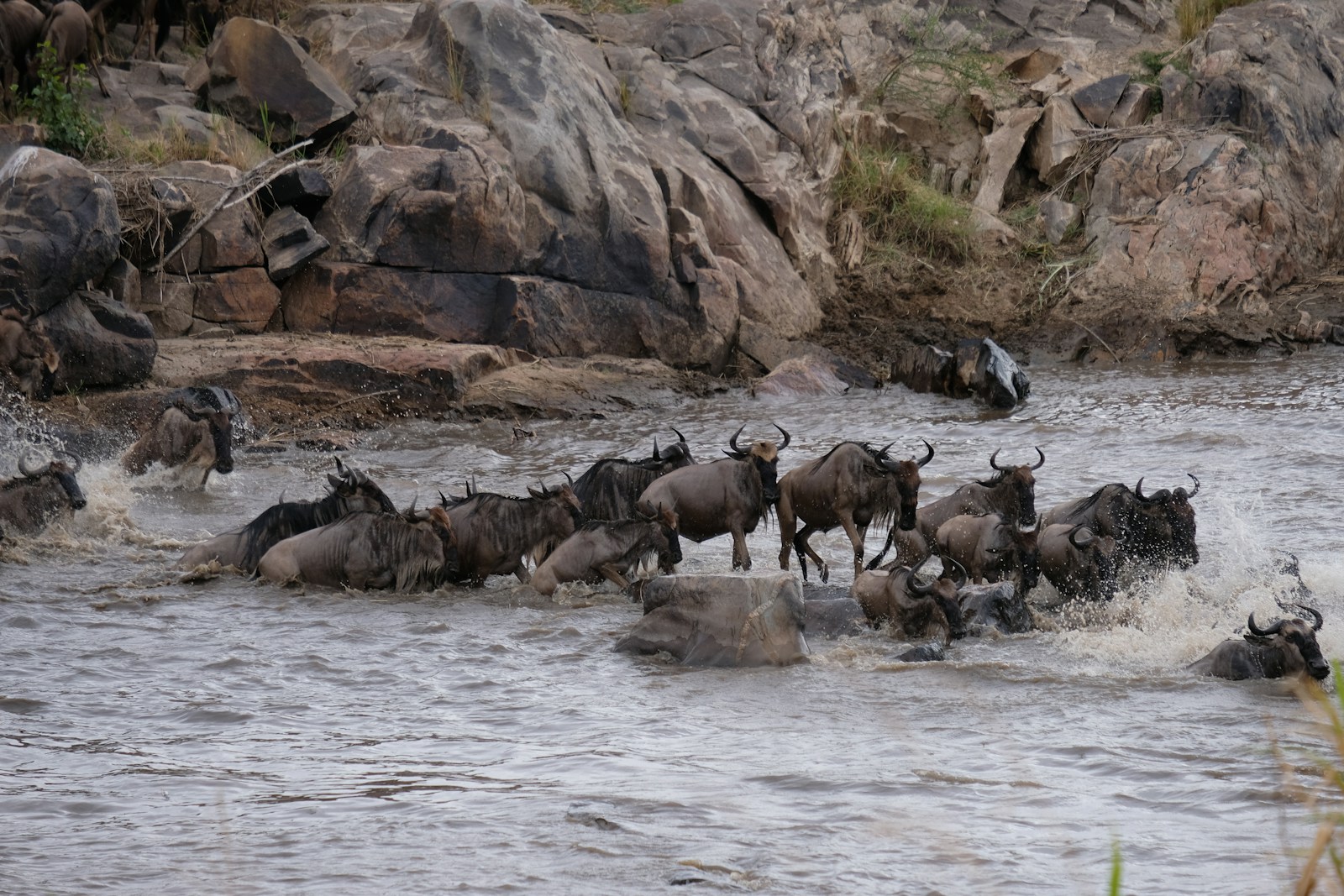
Nothing in East Africa matches the noise and nerve of a wildebeest column throwing itself into the crocodile-thick Mara River at the height of the migration.
By late July the herds have massed on the Serengeti bank in their thousands, bellowing and pacing for hours before a single animal finally commits. Once the first wildebeest goes, the whole column follows in a scrambling, dust-choked rush, hooves drumming on mud and rock as zebras thread through the chaos alongside them.
The crossing itself lasts only minutes but it is total sensory overload: the crack of horns against horns, the slap of bodies hitting water, a crocodile surfacing exactly where you did not expect one. Guides cut the engine and let the vehicle drift into position well before the herd commits, because once it starts there is no repositioning without spooking the animals mid-crossing.
Base yourself on the Kenyan side of the Mara Triangle or the northern Serengeti between late July and September, when the migration is most likely to be pinned against the river. Pack a long lens and patience in equal measure — some mornings you wait four hours for a crossing that never comes, and that is simply the honest rhythm of following a wild herd.