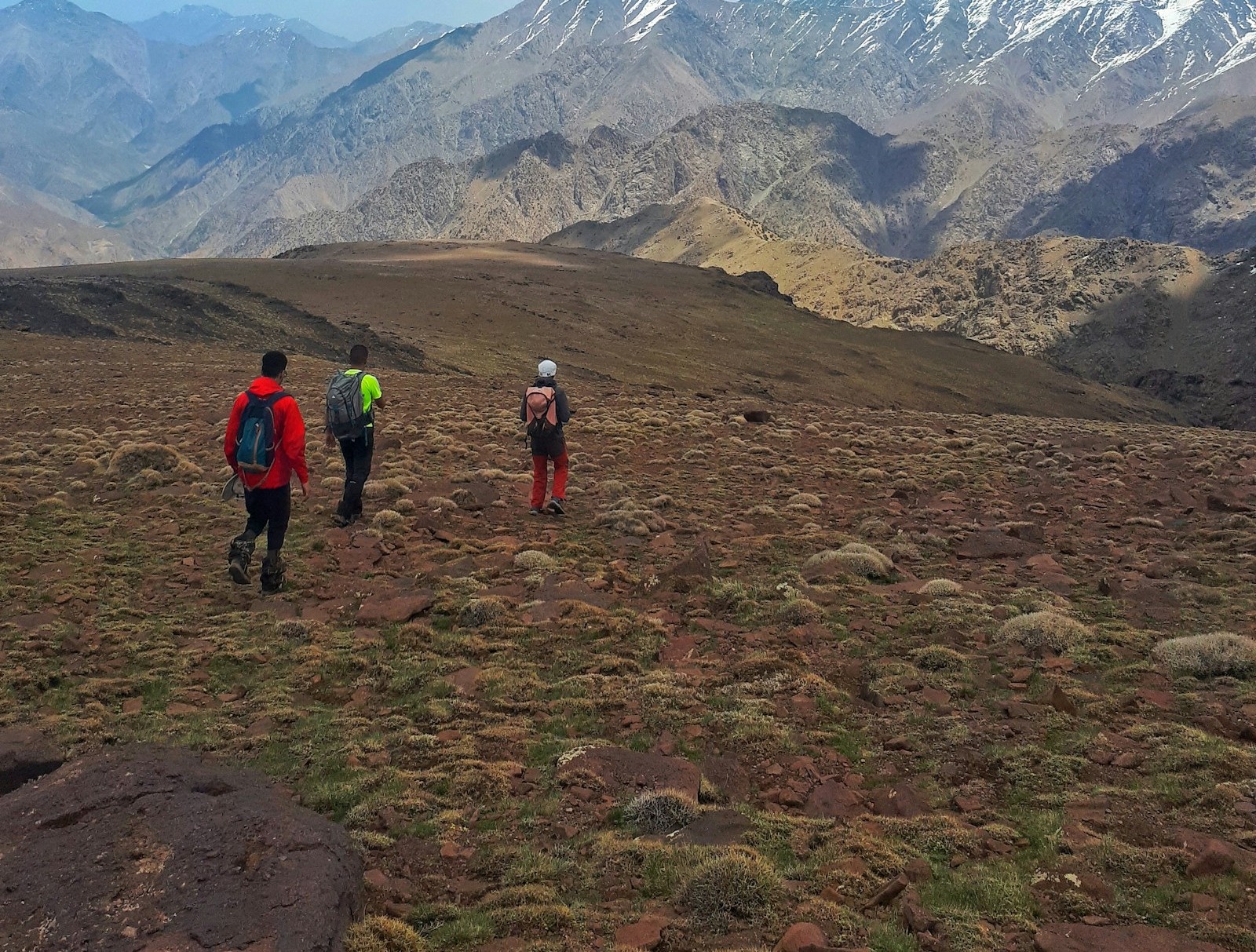
A loop through Berber villages and high scree slopes in Morocco's High Atlas ends atop North Africa's tallest peak.
I hired a mule and a guide in Imlil, the trailhead village an hour from Marrakech, which is standard practice here and cheap enough that almost every trekker does the same. The circuit climbs through walnut groves and irrigated terraces before the villages thin out and the trail turns to bare scree above Sidi Chamharouch, a small shrine marking the last real settlement before the mountains close in.
Refuge du Toubkal sits at the base of the final ascent, a functional stone building crowded with trekkers timing their summit push for sunrise. The push to the top of Jbel Toubkal at 4,167 metres is a long, unglamorous scree slog rather than a technical climb, but the altitude and the pre-dawn cold make it feel harder than the numbers suggest.
I came down via the Tizi n'Ougdemt pass rather than retracing my steps, a longer route into the Azzaden valley that trades crowds for empty ridgelines and a last night in a Berber guesthouse. Go in late spring or early autumn — midsummer heat in the lower valleys is brutal, and winter turns the summit push into a genuine mountaineering objective requiring crampons.