Poland's former royal capital survived the twentieth century with its old town intact, which means you get Gothic spires, a Jewish quarter mid-revival, and some of the cheapest good food in Europe.
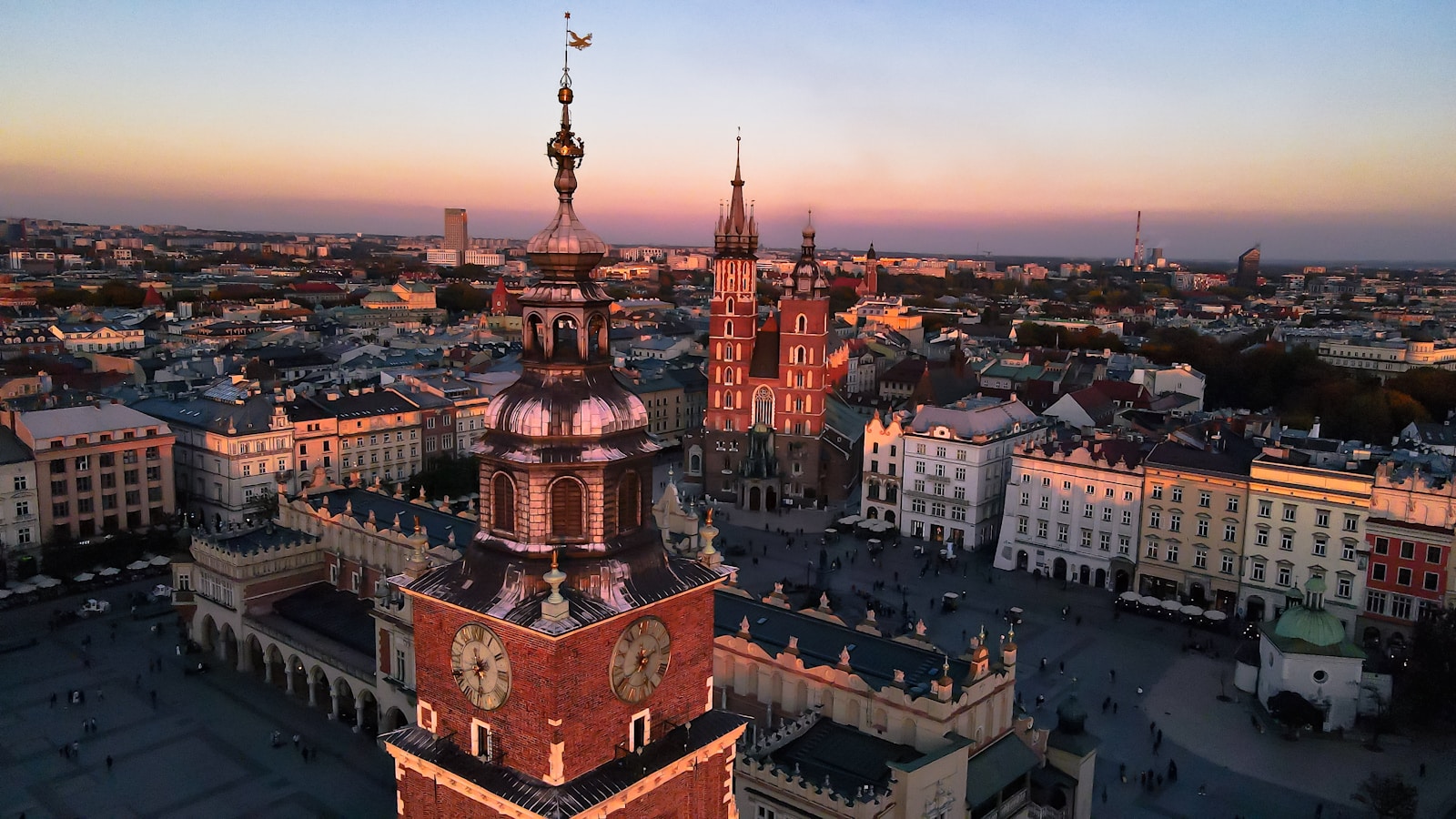
Rynek Główny, the main market square, is the largest medieval square in Europe and it earns the title — the twin towers of St Mary's Basilica dominate one corner, a trumpet call still sounds from the taller spire every hour on the hour, cut off abruptly in memory of a watchman shot mid-note during a Mongol raid. Climb the Town Hall Tower for a rooftop view over the square's café umbrellas before the tour groups arrive mid-morning.
Walk south into Kazimierz, the old Jewish district, where synagogues sit alongside street art and a Sunday flea market spills across Plac Nowy. Grab a zapiekanka, a toasted half-baguette piled with mushrooms and cheese, from one of the stalls that ring the square's round former market hall — it's Kraków's answer to late-night pizza and costs almost nothing. This is also where Schindler's Factory museum sits, a sobering but essential few hours if you have the time.
For lunch, skip the square's tourist-menu restaurants and find a milk bar — a bar mleczny, a state-subsidised canteen left over from the communist era serving pierogi, żurek soup, and cabbage rolls for a few złoty. Bar Mleczny Pod Temida near the university is a reliable one. Two nights gives you the old town, Kazimierz, and either Wawel Castle or a half-day trip to the Wieliczka Salt Mine, depending on which grips you more.